What Providers Need to Know
The Care Quality Commission (CQC) has now rolled out its Single Assessment Framework (SAF) across health and social care services. On paper, the framework promises a clearer, fairer and more consistent way to inspect and regulate services. But for many providers, it also raises new challenges — especially against a backdrop of staff shortages, funding pressures, and public scrutiny.
Recent BBC reports have highlighted ongoing issues within social care — from safety concerns and underfunding to workforce gaps that threaten the ability to deliver consistent, person-centred care. These stories aren’t isolated; they echo what many providers are experiencing daily. The new SAF is meant to help address these issues, but it also adds pressure to demonstrate compliance in new, more structured ways.
What’s Different About the New Framework?
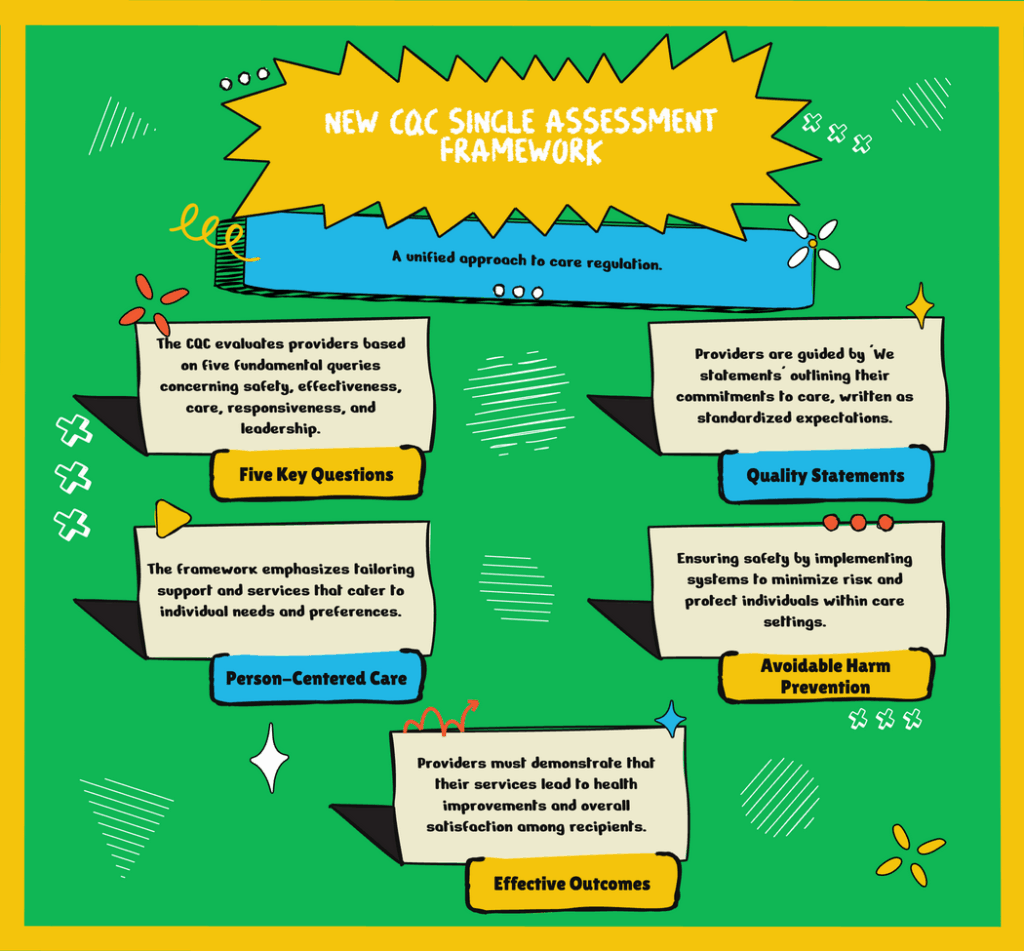
The SAF brings together what used to be multiple regulatory approaches into a single model that applies across all types of care. At its heart are five key questions that the CQC asks of every provider:
- Safe – Are people protected from avoidable harm?
- Effective – Does care, treatment and support achieve good outcomes?
- Caring – Do staff involve people and treat them with compassion, kindness, dignity and respect?
- Responsive – Is care organised so it meets people’s needs?
- Well-led – Do leaders run services that promote high-quality, person-centred care?
Under each question sit quality statements, written as “We statements”, which set out the commitments providers should live up to. These are paired with “I statements”, reflecting what people who use services say matters most to themfull_book_assessment-framework-….
The CQC has been clear: these aren’t just tick-box standards. They’re intended to create a culture where safety, openness and continuous improvement are at the core of everyday practice.
Why Are Providers Struggling?
For providers already under strain, adapting to the SAF can feel daunting. Key challenges include:
- Evidence burden – Providers must now demonstrate compliance with a wider range of evidence, from staffing models to cultural indicators.
- Workforce pressures – BBC coverage has repeatedly underlined the shortage of skilled staff across health and social care. Without adequate staffing, even the best policies can fall short in practice.
- Changing expectations – The shift from outcomes-focused to culture-focused assessment means providers must prove not only what they do but how they do it.
- Public confidence – With news stories exposing cases of poor care, the sector is under sharper public scrutiny than ever. SAF inspections will often be cross-referenced with local authority and NHS data, making transparency non-negotiable.
How Providers Can Prepare
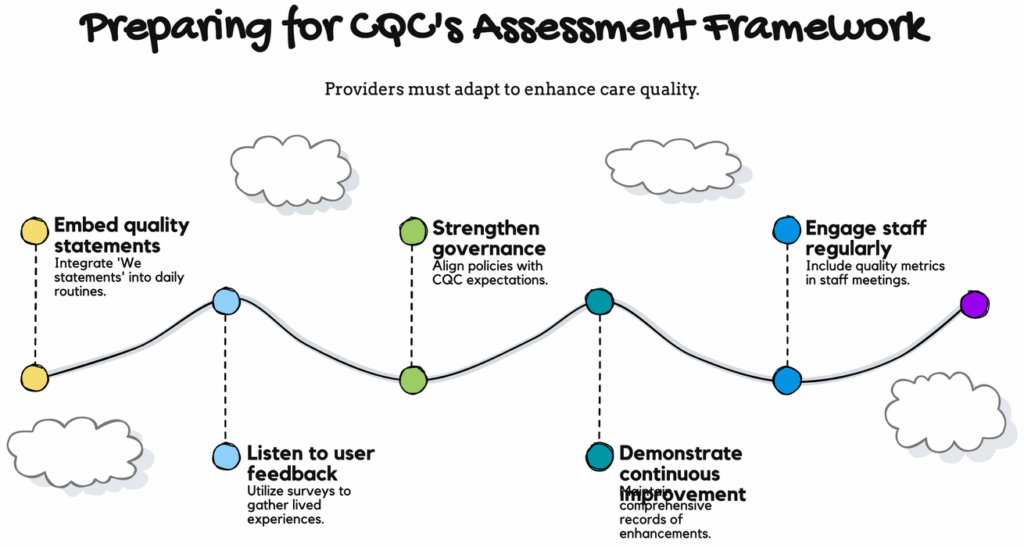
The SAF isn’t just about inspection — it’s about creating a learning culture. Providers can start to adapt by:
- Embedding quality statements into daily practice – Don’t just prepare for inspection day. Make the “We statements” part of supervision, staff meetings, and care planning.
- Listening to “I statements” – Capture the lived experience of people using your service through feedback, surveys, and conversations.
- Strengthening governance – Ensure that policies and monitoring tools clearly map to CQC’s expectations, including regulations on safe staffing, duty of candour, and safeguarding.
- Demonstrating continuous improvement – Keep a clear record of lessons learned, changes made, and outcomes improved. This narrative is as important as the metrics.
Where We Can Help
At Irvine Consultancy, we understand the pressure that leaders and managers face under the new SAF. With over 20 years’ experience in health and social care leadership, compliance, and workforce transformation, we can help you:
- Conduct mock inspections aligned to the SAF
- Develop audit and monitoring tools that map directly to the quality statements
- Support staff training on safety culture, safeguarding, and person-centred care
- Build evidence portfolios that withstand regulatory scrutiny
- Provide leadership mentoring to help managers create a positive, well-led culture
Final Thoughts
The SAF is a step towards more consistent, transparent regulation. But it comes at a time when providers are under immense strain — and the media spotlight has never been sharper. The reality is that compliance is no longer just about avoiding enforcement; it’s about building trust with the people who use your services, their families, and the wider public.
Preparation is key. By embedding the principles of the framework into everyday practice, providers can not only meet CQC expectations but also raise the standard of care for the people who matter most.
If you’re unsure where to start, or if you simply want to stress-test your readiness, get in touch with us at Irvine Consultancy. Together, we can turn regulatory compliance into a driver for genuine improvement.