

What FE Leaders Need to Know
Apprenticeship funding rules 25-26. The new academic year is here — and with it comes fresh changes to apprenticeship funding rules. From 1 August 2025, the updated guidance is live, applying to all apprenticeships that start between now and July 2026.
And there’s another shift too: the Education and Skills Funding Agency (ESFA) has now been absorbed into the Department for Education (DfE). For providers, this means all apprenticeship funding, compliance, and oversight now sits fully within DfE.
So, what’s new — and what does it mean for FE colleges, training providers, and employers?
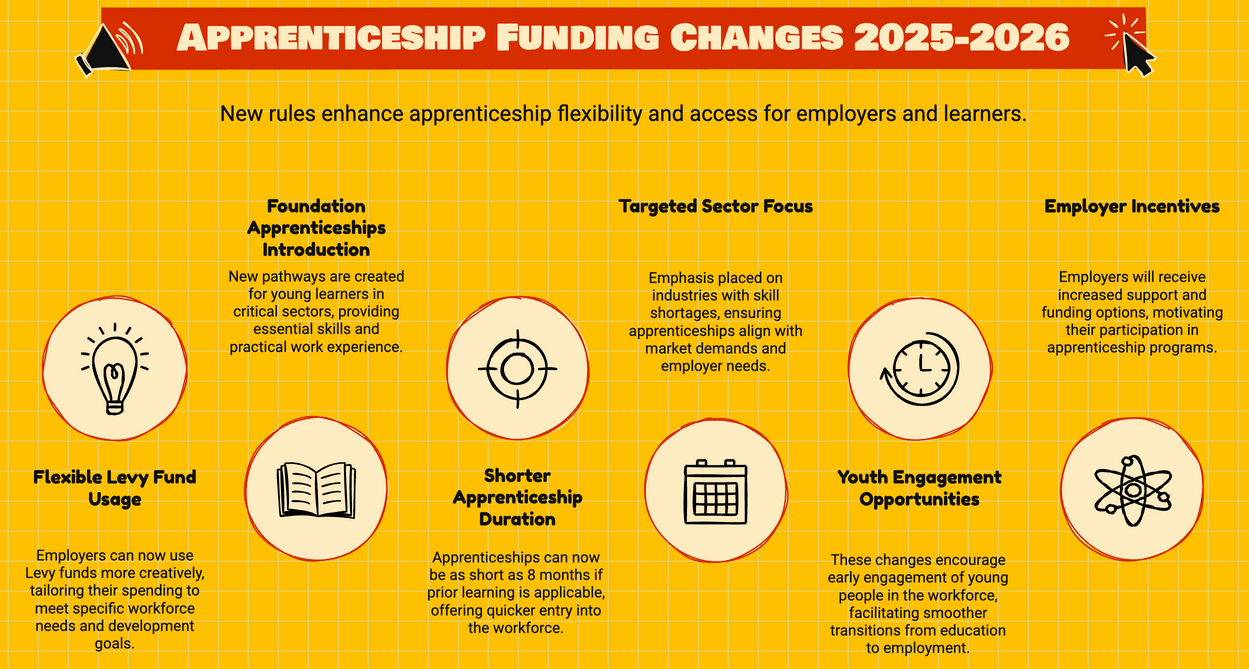
Key Updates to Apprenticeship Funding Rules
Here are the highlights from the new 2025–26 rules:
- Growth and Skills Offer – greater flexibility for employers in how Levy funds can be used.
- Foundation Apprenticeships – new pathways into critical sectors, helping young learners take their first steps while earning.
- Shorter Apprenticeships – minimum duration reduced from 12 months to 8 months where prior learning applies.
- Accelerated Apprenticeships – formal recognition of shorter, fast-tracked apprenticeships for learners with significant prior experience.
- Updated End-Point Assessment guidance – including revised assessment principles, with changes providers will need to embed this year.
What This Means for FE Providers
📌 Curriculum planning – consider where shorter or accelerated apprenticeships could help meet demand.
📌 Recognition of prior learning (RPL) – strengthen your RPL processes; this is now a driver of both funding and compliance.
📌 Foundation routes – check eligibility and think strategically about how these learners fit your provision.
📌 EPA alignment – revisit contracts and delivery plans to make sure assessment reflects the updated rules.
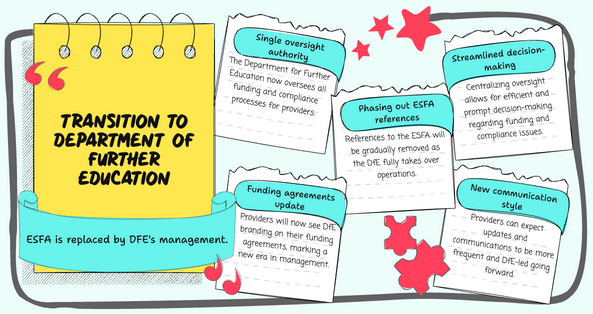
ESFA → DfE: Why It Matters
The transition is more than a name change. With ESFA functions now merged into DfE:
- Providers will see DfE branding on funding agreements and guidance (ESFA references are being phased out).
- Oversight, funding, and compliance sit with one central department, streamlining decision-making.
- Communication may feel different — providers should expect more DfE-led updates, webinars, and sector engagement.
Looking Ahead
The 2025–26 rules reflect a shift towards flexibility, progression, and learner-centred pathways. For FE providers, this means:
- Reviewing program structures.
- Updating ILR and compliance processes.
- Supporting employers to navigate new opportunities.
At Irvine Consultancy, we help training providers and colleges stay inspection-ready, funding-compliant, and strategically aligned. If you’d like to unpack what these changes mean for your organisation, get in touch — we’re here to guide you through.